Berat and Gjirokastër: Albania’s UNESCO Cities of Stone and Windows
Ottoman houses stacked up the hillsides, castles that are still lived in and centuries of history: a guide to Albania's two UNESCO-listed museum cities.
Photo: Konpasu.de on Unsplash
Few places show Albania’s history as clearly as Berat and Gjirokastër. Together they are listed by UNESCO as rare, well-preserved examples of Ottoman-era towns. Gjirokastër was inscribed in 2005 and Berat joined it in 2008. Each has its own character, and the two are easy to combine on one trip.
Berat: the city of a thousand windows
Berat’s nickname comes from the white houses that climb the hillside above the Osum River, their rows of windows looking out over the valley. The Mangalem quarter rises on one bank and the Gorica quarter faces it from the other, linked by a stone footbridge.
What to see in Berat
- Berat Castle (Kalaja): a hilltop citadel that people still live in, with cobbled lanes, Byzantine churches and views over the whole valley.
- Onufri Iconographic Museum: set inside the Cathedral of the Dormition of St Mary, it displays icons by Onufri, the 16th-century master famous for his striking red pigment.
- Mangalem and Gorica: wander the lanes at golden hour, when the houses glow above the river.
- The Lead Mosque: a 16th-century landmark at the foot of the old town.
Berat is also wine country. Ask your guide about a tasting at a family winery and try the local Shesh i Zi red.
Gjirokastër: the city of stone
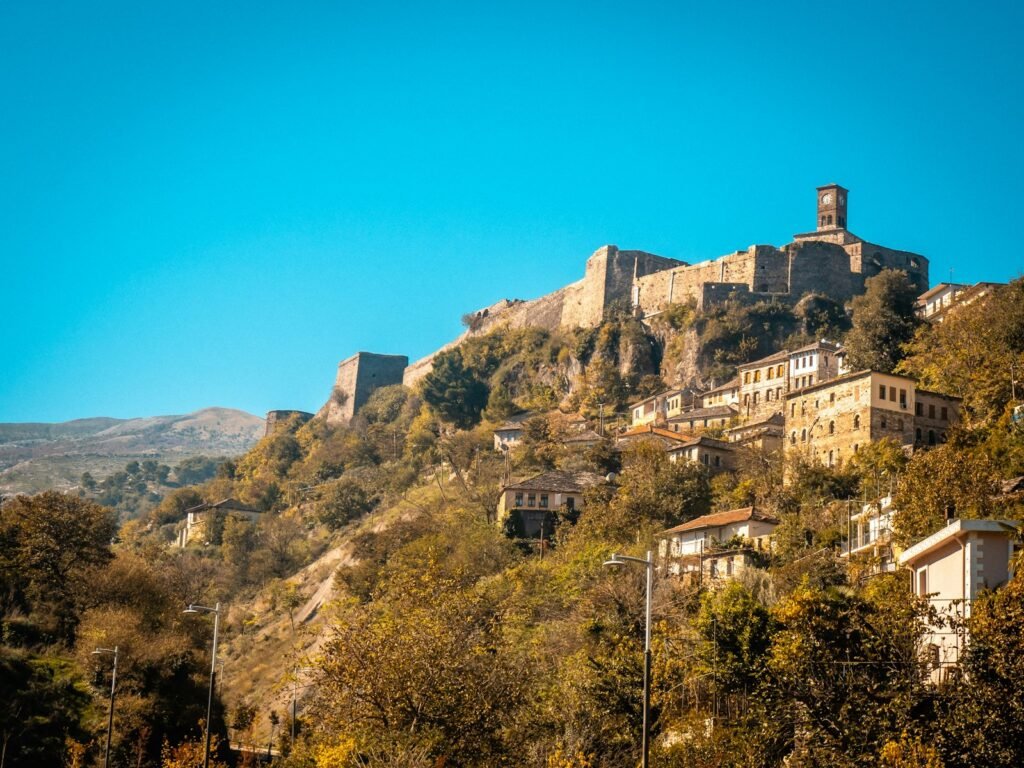
Two to three hours south, Gjirokastër feels completely different. Its fortified tower houses are built from grey stone and roofed with stone slates, giving the whole town a silver sheen against the mountains of the Drino valley.
What to see in Gjirokastër
- Gjirokastër Castle: one of the largest fortresses in the Balkans, with an arms museum, vaulted galleries and wide views.
- The Old Bazaar: steep cobbled streets lined with craft shops, cafés and carpet sellers.
- Traditional houses: step inside a restored Ottoman house such as the Skenduli or Zekate House to see painted ceilings and carved woodwork.
- The Cold War Tunnel: a hidden network of rooms under the town, built for an emergency that never came.
Gjirokastër is also the birthplace of Ismail Kadare, Albania’s most celebrated writer, whose novel Chronicle in Stone is set in these streets.
What to eat
In Gjirokastër, try qifqi, fried rice balls with herbs and egg that you won’t find in many other places. In both towns look for slow-cooked lamb, stuffed peppers, fresh cheese and homemade raki.
Tips for your visit
- Wear comfortable shoes: both towns are steep and the cobbles are slippery after rain.
- Stay overnight in a restored guesthouse to see the old towns after the day visitors leave.
- Spring and autumn bring mild weather and soft light, perfect for photography.
Visit with a local guide
Berat is part of our Albania in 4 days tour, and both cities feature in our cultural tours. Food lovers should also look at our culinary and wine tours.
Ready to see it for yourself?
Small groups, private tours and tailor-made trips across Albania and the Balkans, planned by a local team.